Dear Amazon, Google, and Eli Lilly: You Need a Nurse Practitioner at the Table
Amazon is now treating eczema, contact dermatitis, and fungal rashes through a virtual clinic embedded inside a Prime membership. The largest e-commerce company in the world is now your competition in dermatology, and they have built the infrastructure to reach your patients before you did. The companies building the future of healthcare are doing it without the clinical expertise of the providers who have been delivering that care for decades. They have not been required to seek it, and as nurse practitioners we have not yet organized ourselves to demand a seat. This article is the demand.
First, Who Nurse Practitioners Are, And Why That Matters Strategically
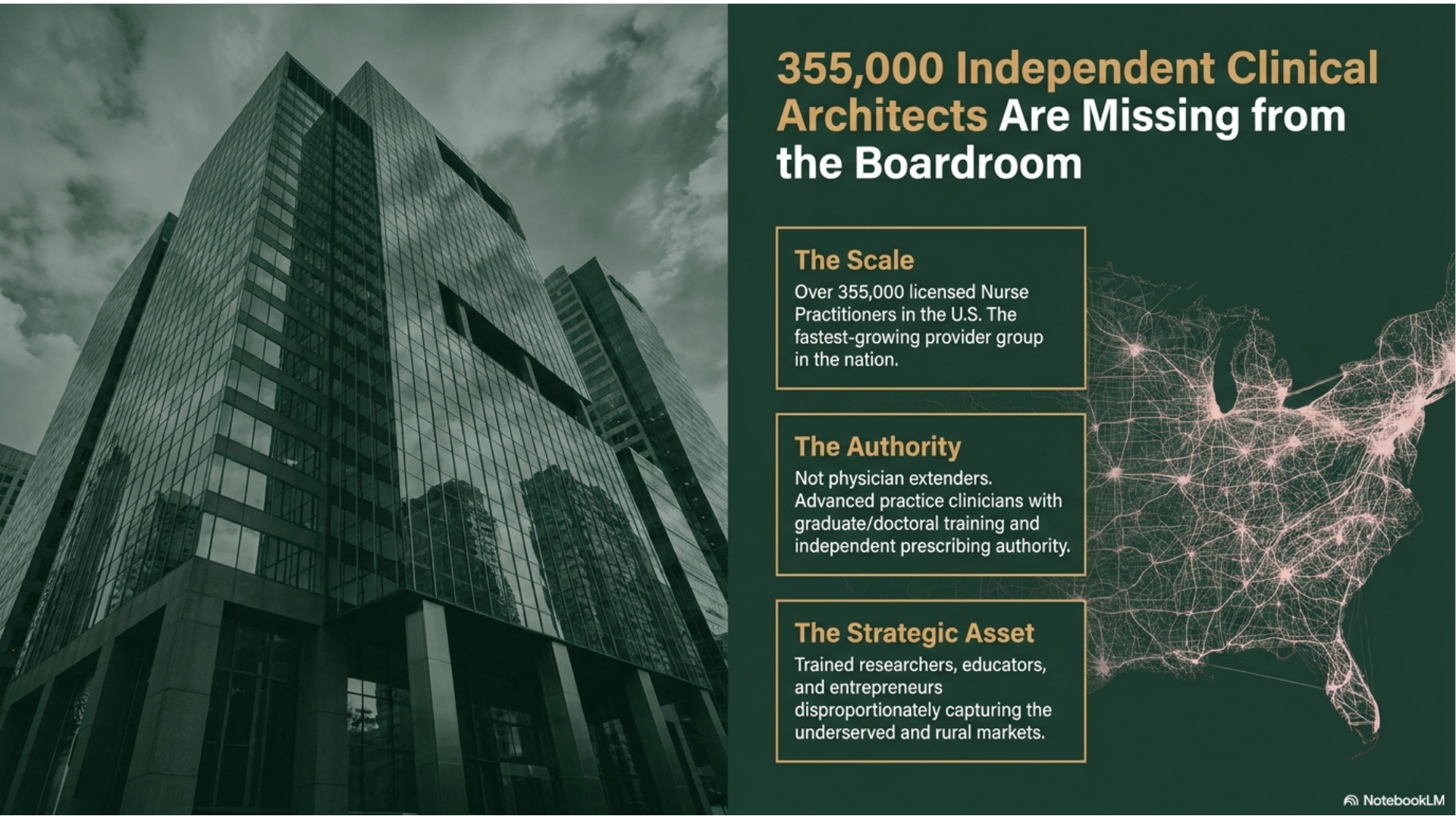
The United States has more than 355,000 licensed nurse practitioners. We are the fastest-growing provider group in the country. We deliver primary care, specialty care, and preventive services to millions of patients annually, disproportionately in underserved communities, rural settings, and among patients with the highest disease burden. We are the point of contact for the populations that pharmaceutical companies are building trials around, that Amazon is building primary care networks for, and that Google is designing AI health tools to reach.
We are not assistants. We are not physician extenders. We are advanced practice clinicians with graduate and doctoral training, independent prescribing authority in a majority of states, and in many cases, the only consistently accessible provider a patient will see in a given year. We are also trained researchers, educators, entrepreneurs, and policy advocates.
The question is not whether NPs are qualified to advise trillion-dollar healthcare decisions. The question is why these companies are making trillion-dollar healthcare decisions without us.
Amazon Health Services: The SWOT Case For NP Leadership
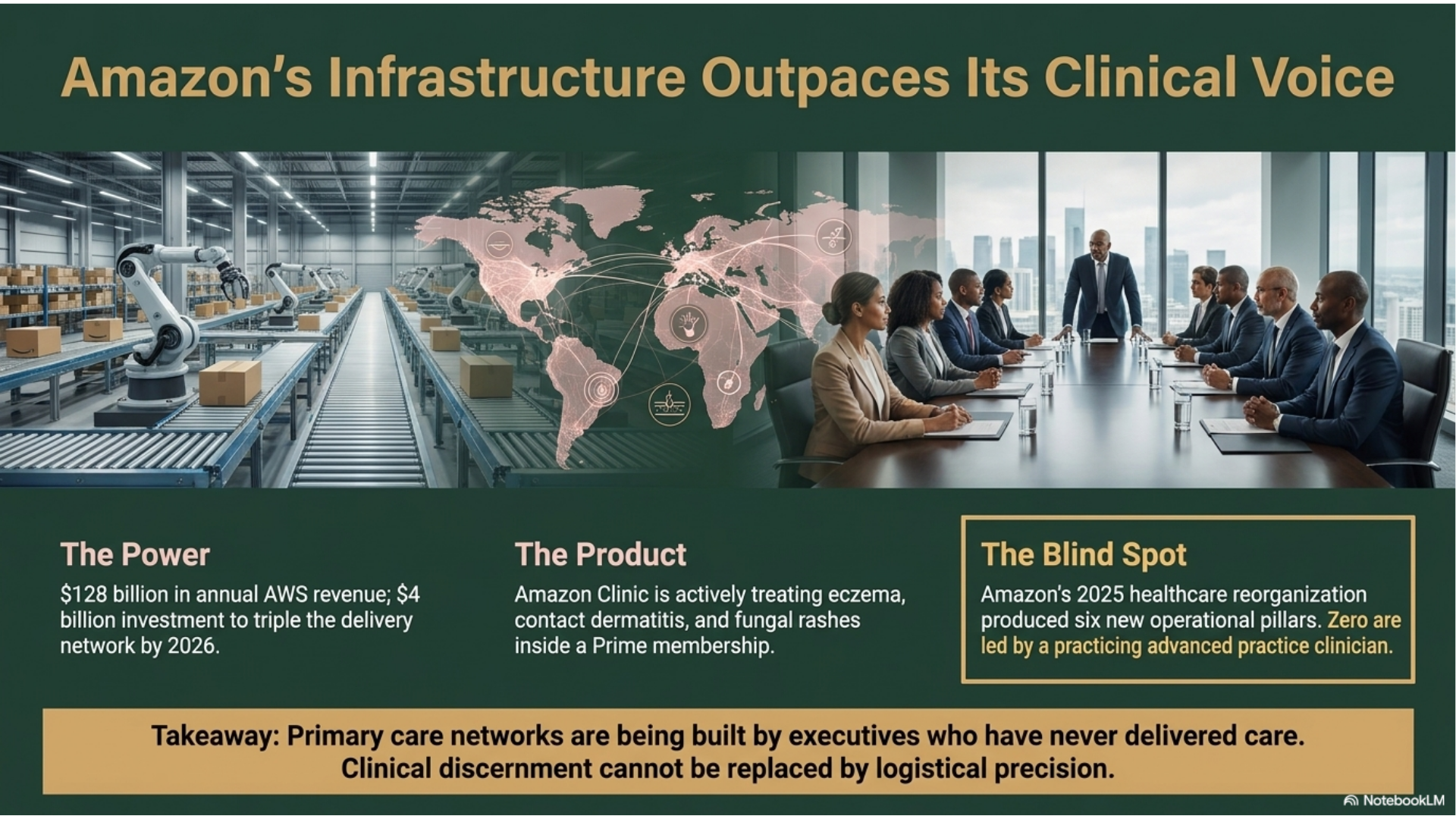
Strengths: AWS generates over $128 billion in annual revenue and holds approximately 33% of the cloud infrastructure market. Health systems are leveraging AWS tools for analytics and operations, while Amazon One Medical has expanded primary care partnerships with major health systems citing improved access and patient growth. Amazon Pharmacy has become a major consumer-facing prescription business, and Amazon launched a weight management program through One Medical integrating primary care, pharmacy, and virtual care for patients on GLP-1 medications. The infrastructure is real, growing, and well-capitalized.
Weaknesses: Amazon's main weaknesses include a 65.9% free cash flow decline in 2025, a $200 billion 2026 capital expenditure burden, and ongoing FTC antitrust exposure. But the more consequential weakness for Amazon Health is: a structural absence of clinical voice at the strategy level. Amazon's healthcare reorganization in 2025 produced six new operational pillars — none of which are led by a practicing or former advanced practice clinician. The result is a primary care network being built by people who have never delivered primary care. That is a gap that will show in product design, in patient trust, and in outcomes data.
Opportunities: Amazon Clinic now addresses dermatological presentations including eczema, contact dermatitis, and fungal rashes, conditions that require clinical discernment, not just algorithmic triage. Amazon is investing over $4 billion to triple its delivery network by the end of 2026, extending same-day prescription delivery to nearly half of U.S. customers, with a specific focus on rural communities. Rural communities are disproportionately served by NPs. We are the providers Amazon's pharmacy customers are most likely to have seen. We understand how those patients make decisions, what they trust, what they avoid, and what they need explained before they fill a prescription.
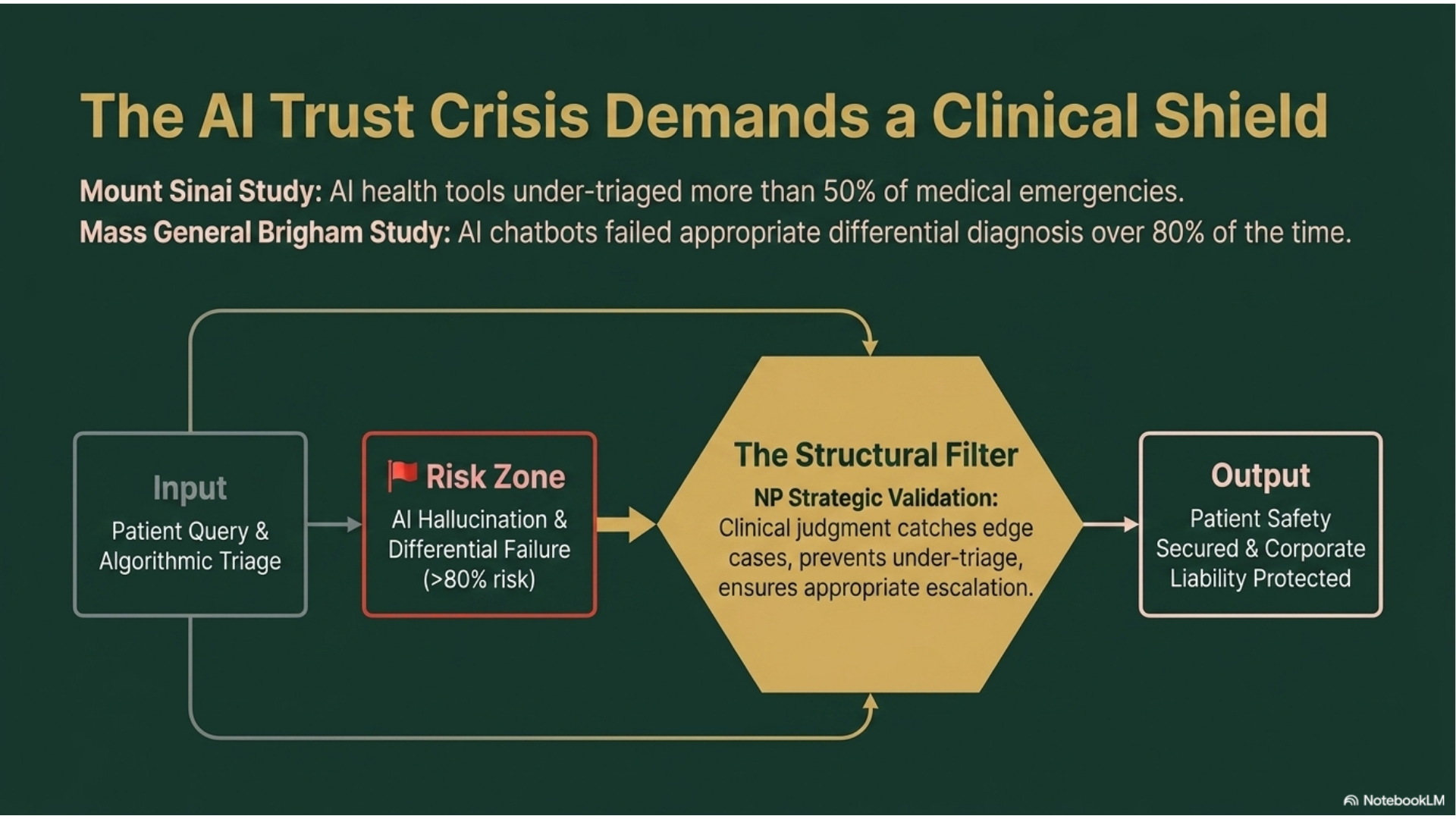
Threats: A recent Mount Sinai study found that AI health tools under-triaged more than half of medical emergencies in structured clinical testing, potentially directing patients with serious conditions toward routine follow-up rather than emergency care. Researchers at Mass General Brigham found that AI chatbots failed to produce an appropriate differential diagnosis more than 80% of the time. Amazon Health AI is now a consumer-facing product. When it gets clinical guidance wrong for a patient who has no other provider to catch the error, Amazon bears liability, reputational, legal, and ethical. NPs are trained to catch exactly those errors. We are the clinical layer between AI output and patient harm: the human in the loop.
What NP leadership solves for Amazon: Clinical protocol design for One Medical's expansion into specialty conditions, including the dermatological presentations their virtual platform now treats. Community health strategy for rural and underserved markets. Quality assurance architecture for Amazon Health AI. Skin of color dermatology competency for the conditions presenting in their patient population. We need to understand Amazon's business, and Amazon needs to understand what happens to its business without clinical expertise in the room when the decisions are made.
Alphabet/Google: The SWOT Case For NP Leadership
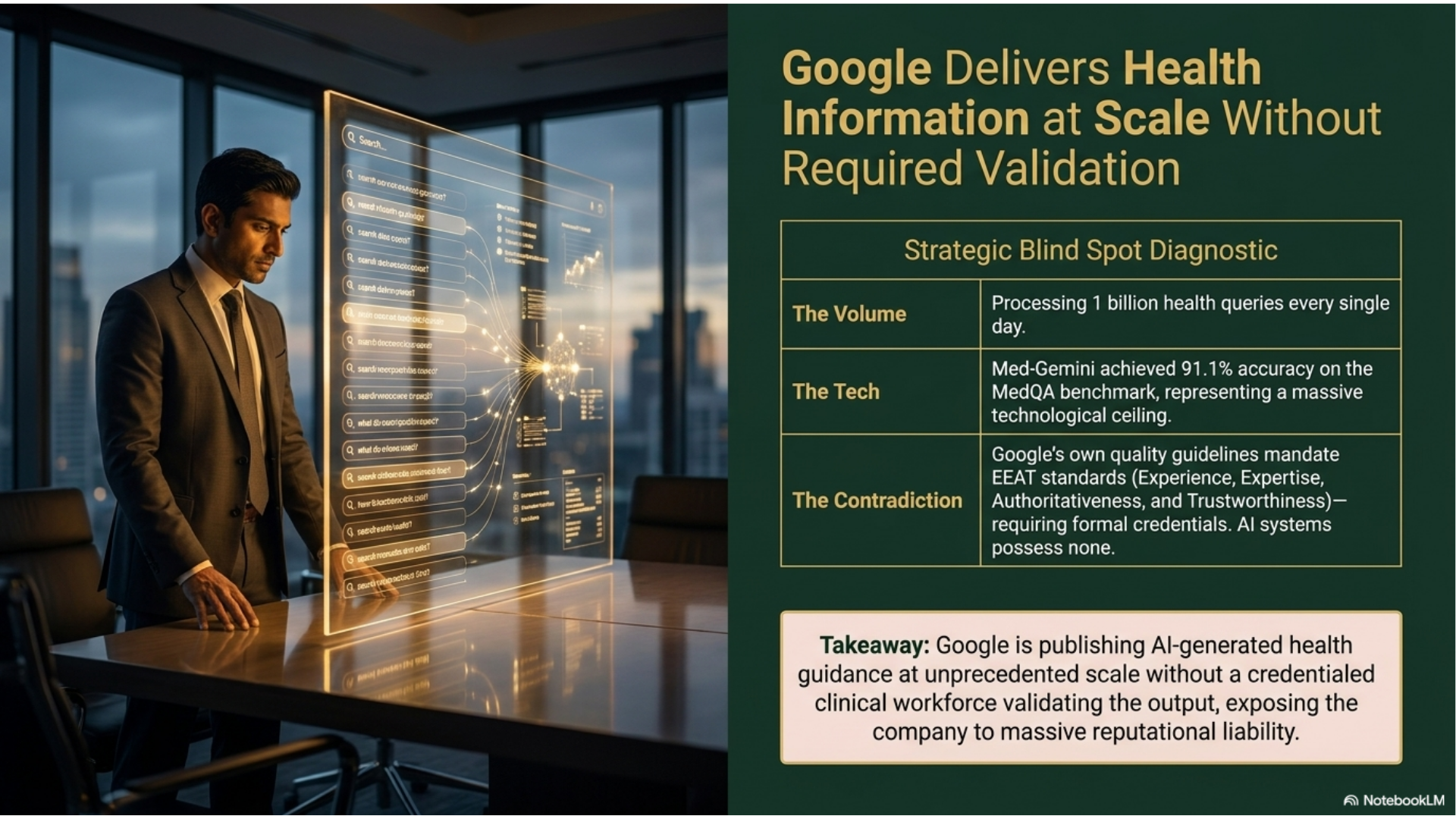
Strengths: Alphabet crossed $400 billion in annual revenue for the first time in 2025, driven by double-digit growth in search, cloud, and subscriptions. Google holds a 90% global search market share as of early 2026, and Google Cloud revenue grew 63% year over year in Q1 2026. Google processes over one billion health queries every single day, and in 2026 is deploying a coordinated set of AI tools across search, wearables, clinical research, and genomic sequencing to respond to that demand.
Weaknesses: A federal judge ruled in September 2025 that Google must stop exclusive search distribution deals. A separate ruling in April 2025 found Google's publisher ad tools violated antitrust laws. The DOJ cross-appealed in February 2026, pushing for Chrome divestiture. Regulatory exposure is Google's most visible weakness. But the clinical weakness is just as significant and far less discussed. Google's own quality guidelines acknowledge that health content requires Experience, Expertise, Authoritativeness, and Trustworthiness standards that explicitly require first-hand clinical experience and formal credentials. AI systems possess none of these qualifications. Google is publishing AI-generated health guidance at a scale of one billion queries per day, without a credentialed clinical workforce validating what goes out the door.
Opportunities: Med-Gemini (not to be confused with BastionGPT) achieved 91.1% accuracy on the MedQA benchmark, outperforming prior models, making it the highest-performing medical AI model on that benchmark at publication. The ceiling on what Google's health AI can accomplish is genuinely high. The opportunity is enormous. This opportunity between potential and trustworthy delivery is a clinical one.
Threats: A Guardian investigation exposed clinical misfires in Google AI Overviews involving diet, lab values, and cancer screening. Approximately a third of U.S. adults have turned to AI for health information and advice as of March 2026, and four in ten of those users have uploaded personal medical information to receive personalized guidance. The scale of that trust, extended to a system that has documented accuracy failures in clinical contexts, is one of the most significant patient safety risks in modern healthcare. When AI Overviews get cancer screening guidance wrong for a patient in a rural county with no other access to a provider, Google's liability is a policy crisis.
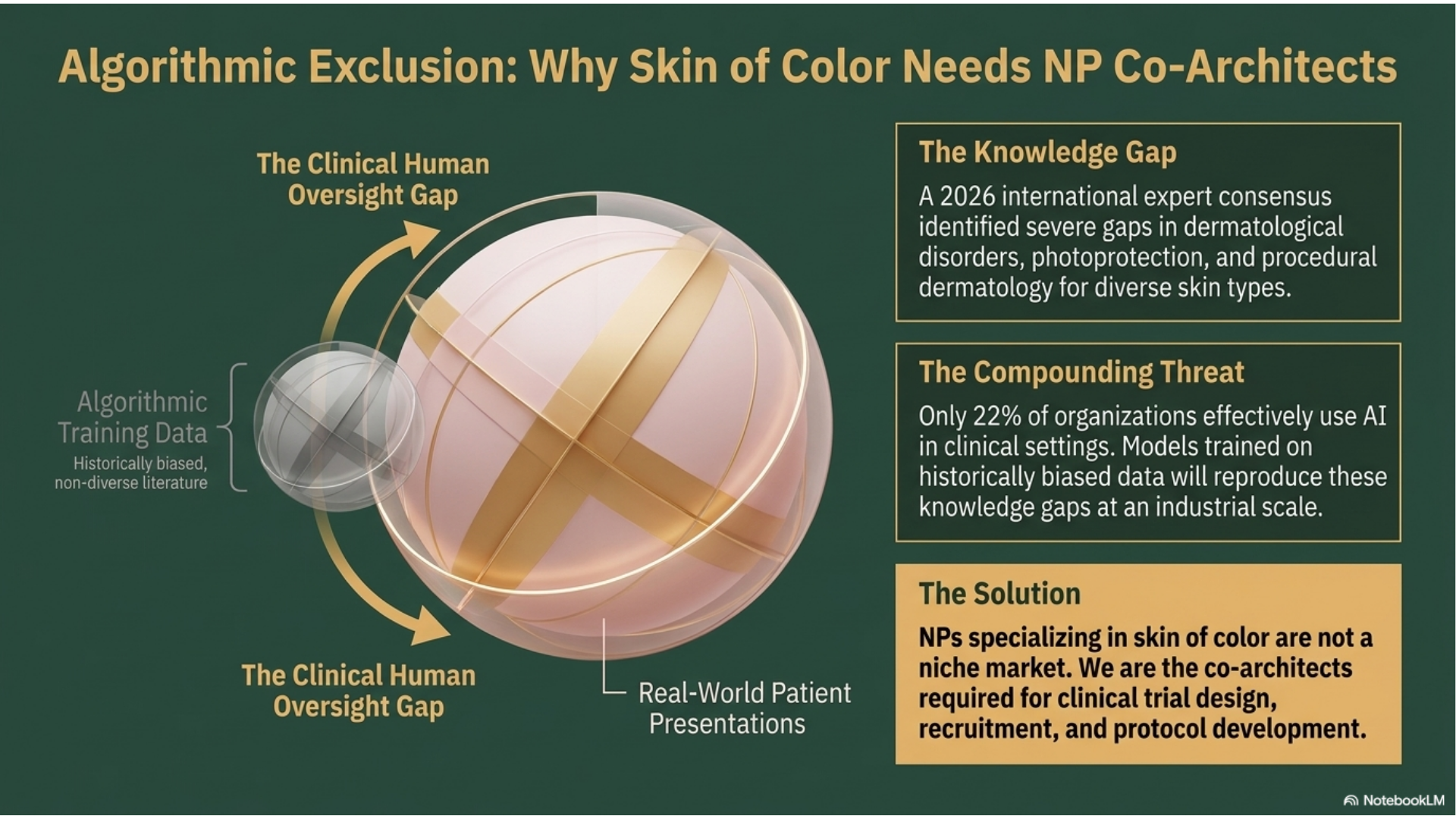
What NP leadership solves for Google: Clinical review architecture for AI Overviews in health categories. Skin of color equity review for Med-Gemini training datasets, because inadequate diversity in clinical trials and knowledge gaps in dermatological disorders in diverse populations remain a documented, persistent problem in the field, and the AI trained on that biased literature will reproduce those errors at scale. Community trust strategy for the billion daily users who bring their most vulnerable health questions to a search bar. NPs are trained in health literacy, cultural awareness, and patient education in ways that engineers and data scientists are not. That is a gap in their training that we can fill.
Eli Lilly: The SWOT Case For NP Leadership
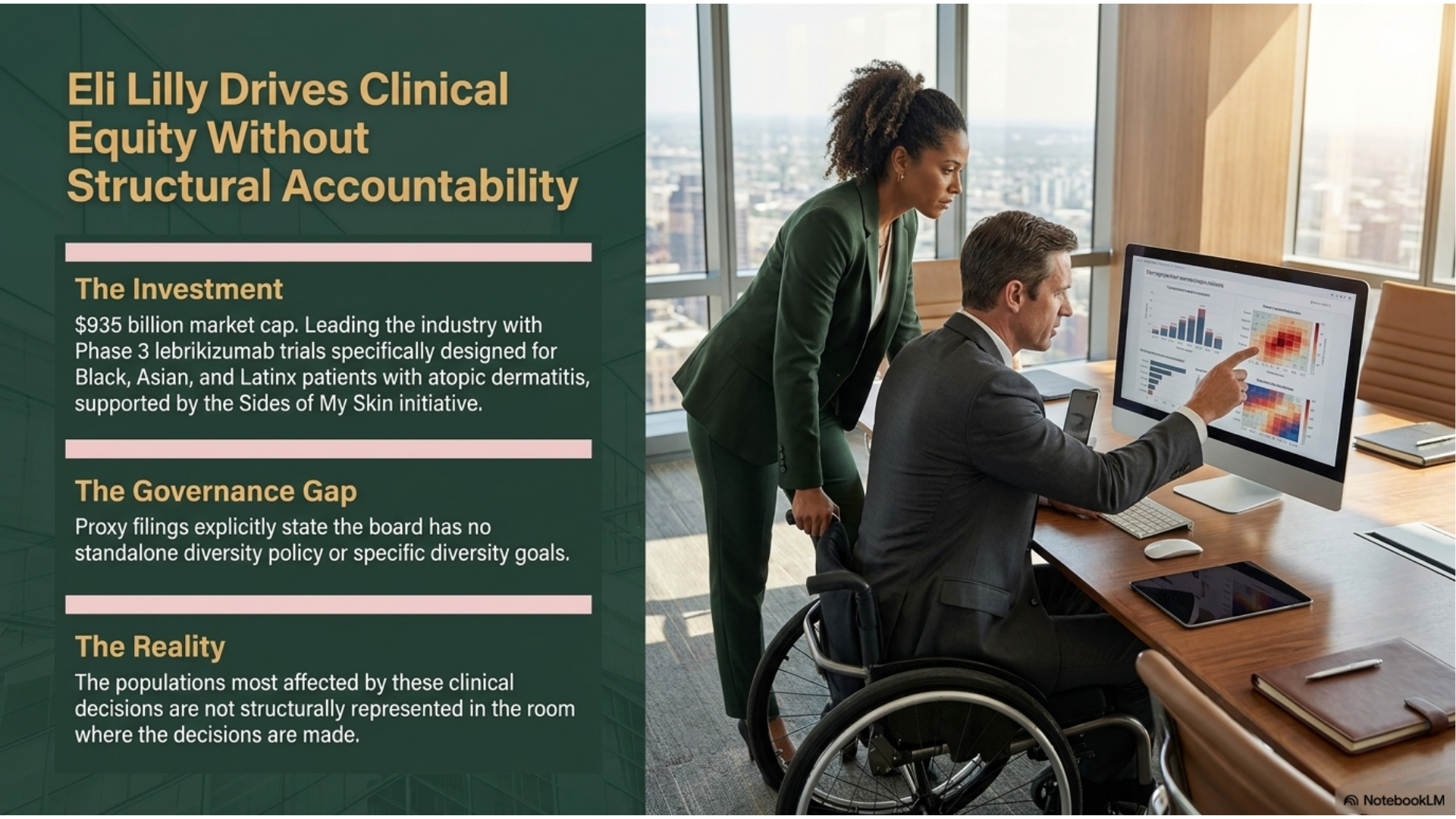
Strengths: Eli Lilly's market capitalization of approximately $935 billion reflects a pharmaceutical portfolio that includes some of the most consequential drug approvals of the decade. Their investment in dermatology equity is specific and documented. Lilly conducted the first standalone Phase 3 clinical trial ever designed to focus on the needs of people with skin of color suffering from moderate-to-severe atopic dermatitis, studying lebrikizumab and its specific clinical characteristics in Black, Asian, and Latinx patients. Their Sides of My Skin initiative focuses on supporting earlier diagnosis, quicker referrals, and consistent follow-up for diverse populations, working alongside healthcare professionals to improve education, navigation, and access.
Weaknesses: The language in Eli Lilly's own proxy filings is instructive. Their board has stated that it does not have specific diversity goals or a standalone diversity policy, and that it seeks director candidates who represent a mix of backgrounds and experiences to enhance deliberations. That is a corporate governance statement that, when applied to a company making clinical decisions about dermatological conditions in diverse populations, produces a predictable outcome: the populations most affected by the conditions are not in the room where the decisions are made. No standalone diversity policy means no structural accountability. And no NP in a leadership seat means no clinical voice that routinely delivers care to underinsured, underdiagnosed, and underserved patients with skin of color.
Opportunities: An international expert consensus published in 2026 identified knowledge deficits in dermatological disorders, photoprotection, and procedural dermatology in people with diverse skin types as a critical area requiring coordinated action, with inadequate diversity in clinical trials specifically named as a compounding barrier. Lilly has positioned itself as the company willing to do the work the rest of the industry ignores. That is a competitive advantage that compounds when the right clinical voices are embedded in the strategy.
Threats: Only 22% of organizations have figured out how to effectively use AI in clinical settings, and pharmaceutical companies increasingly rely on AI for drug discovery, clinical trial design, and patient outreach. If the training data feeding those AI systems reflects the same historical exclusion of skin of color that has characterized dermatology for decades, Lilly's equity investments in clinical trials will be undermined by the infrastructure used to deploy them. The solution is clinical advisors who have treated those patients and can identify the difference between what the algorithm says and what the patient actually experiences.
What NP leadership solves for Eli Lilly: Community health outreach strategy grounded in actual point-of-care experience with the populations Lilly's clinical trials aim to serve. Clinical trial design feedback from providers who see the barriers to recruitment, retention, and adherence in real time, through a patient relationship. Skin of color dermatology education that goes beyond awareness campaigns into clinical protocol development. NPs who specialize in dermatology with a skin of color focus are not a niche. We are the largest growing provider group working directly with the patients Lilly's equity agenda is built around. We are the co-architects it has been missing.
Walmart: The SWOT Case For NP Leadership, And The Cautionary Tale Already Written
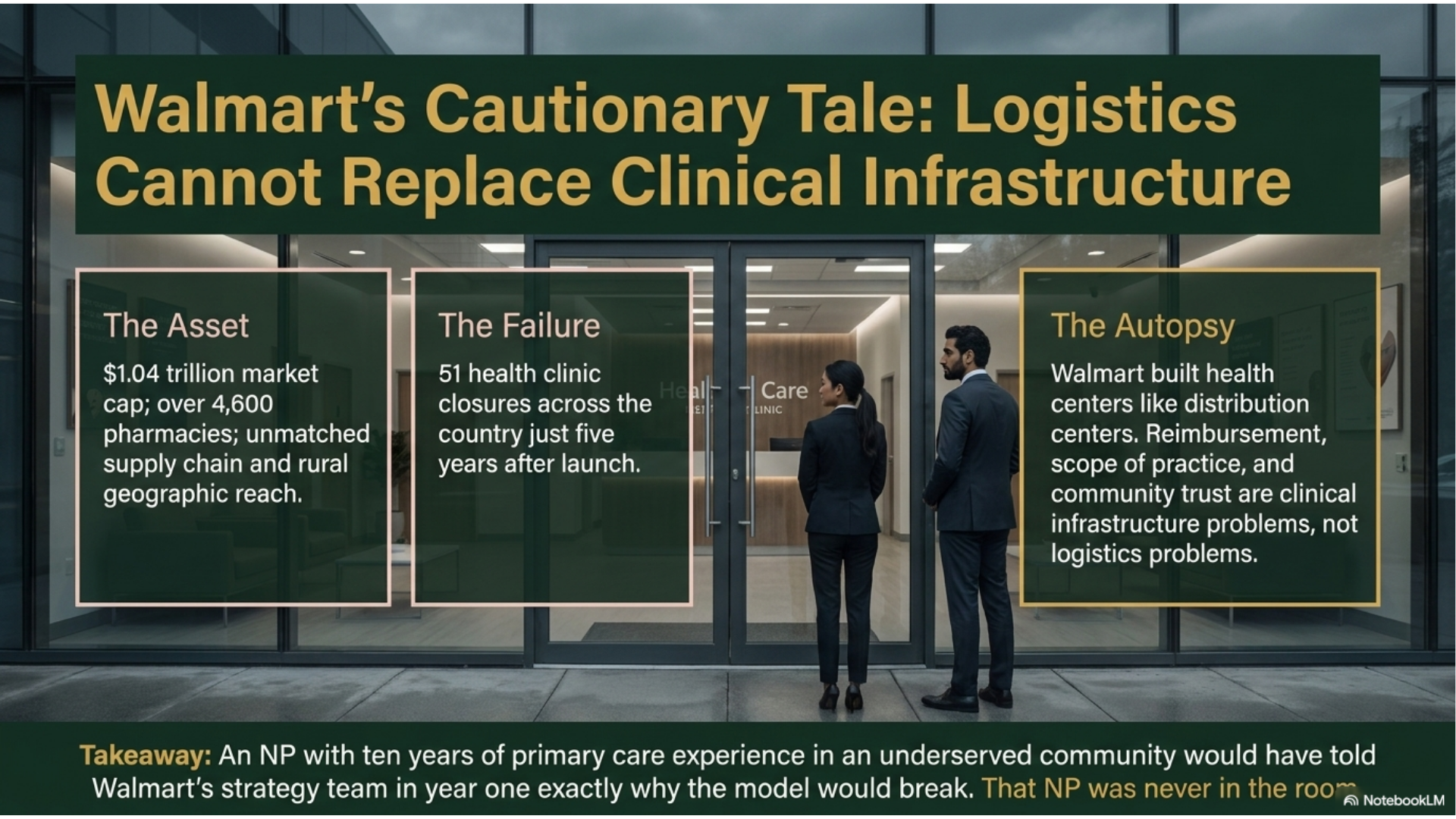
Walmart sits at number fourteen on the top 20 assets list at $1.04 trillion. It belongs in this conversation not only because of what it is attempting in healthcare, but because of what it already attempted, and why it failed.
Strengths: Walmart operates more than 4,600 pharmacies and over 3,000 vision centers across the country, giving it one of the largest existing healthcare footprints of any retailer in the world. By 2025, Walmart had accelerated its investment in refrigerated drug logistics, AI-driven automation, cold chain innovations, and telehealth integration, signaling a long-term vision to expand its role in the healthcare retail sector. Its supply chain infrastructure, customer volume, and geographic reach, particularly in rural and underserved communities, represent a genuine structural advantage that no health system can replicate.
Weaknesses: Walmart announced the closing of all 51 of its health centers and virtual care operations just five years after they launched. Those centers had been offering primary care, dental care, behavioral health, audiology, labs, X-ray, and telehealth services. The company cited an unsustainable business model plagued by reimbursement challenges and rising operating costs. That explanation is accurate as far as it goes. But it does not go far enough. Reimbursement challenges and operating costs are not surprises in healthcare. They are the known terrain. Every provider who has ever billed an insurance company, negotiated a collaborating agreement, or managed a practice budget understands that healthcare economics are not retail economics. The providers who build sustainable clinical practices understand this because they live it. Walmart built its health centers the way it builds distribution centers, at scale, with logistics precision, without the clinical leadership that would have told them from day one that the model was not built to last.
Opportunities: Walmart is leasing its former clinic spaces to other healthcare providers, including Humana's CenterWell, Mercy Primary Care, and Access Medical, which means the infrastructure still exists and the community relationships are still intact. Walmart's investments in telehealth integration and AI-driven pharmacy automation signal that the company has not abandoned healthcare; it has recalibrated. The opportunity is significant. Walmart has 4,600 pharmacy locations in communities where NPs are often the only advanced practice providers within reach. A telehealth and pharmacy integration model built with NP clinical leadership from the ground up, not retrofitted onto a retail framework, is a viable and potentially transformative community health strategy.
Threats: The Association of American Medical Colleges forecasts a primary care physician shortage of between 17,800 and 48,000 by 2034, while approximately 84 million Americans already live in a region with a shortage of primary care providers. Walmart's exit from primary care did not make that shortage smaller. It made it larger in the communities Walmart served. CVS acquired Oak Street Health for $10.6 billion and is now losing money on the chain and closing underperforming locations. Walgreens is looking to sell VillageMD after investing billions. The pattern is consistent across every retail healthcare entrant: significant capital deployed, significant patient access created, unsustainable exit. The threat for Walmart is not that it failed once. It is that the industry keeps failing the same way, by treating healthcare delivery as a product category rather than a clinical discipline, and Walmart has not yet demonstrated it understands the difference.
What NP leadership would have solved for Walmart: The Walmart Health failure is the most instructive data point in this entire article. It proves with specificity what happens when you build a clinical operation without clinical architects in the room. Reimbursement complexity, scope of practice variation by state, patient population needs assessment, community trust building, clinical protocol development for diverse patient populations; these are not business problems that a logistics framework can solve. They are clinical infrastructure problems that require clinical leadership from the first conversation, not the last. An NP with ten years of primary care experience in an underserved community would have told Walmart's strategy team in year one exactly why the model was going to break. That NP was never in the room. The $1.04 trillion company on the market cap list has the infrastructure, the community reach, and the pharmacy network to build something that actually works for the patients who need it most. What it has not yet tried is building it with the clinical voices that understand those patients already.
The Venture Capitalist Framework Applied: The Business Case, Stated Plainly
There is a management trust framework that evaluates organizations on four criteria: +The quality and expertise of the management team
+The velocity with which the organization moves toward the right solution
+The ability to hire from centers of excellence and retain top talent
+The capacity to productize unique unfair advantages
Every company discussed in this article has a documented vulnerability on at least two of those criteria, specifically in healthcare, specifically because they lack clinical leadership that has actually delivered care to the populations they are now building products and services for.
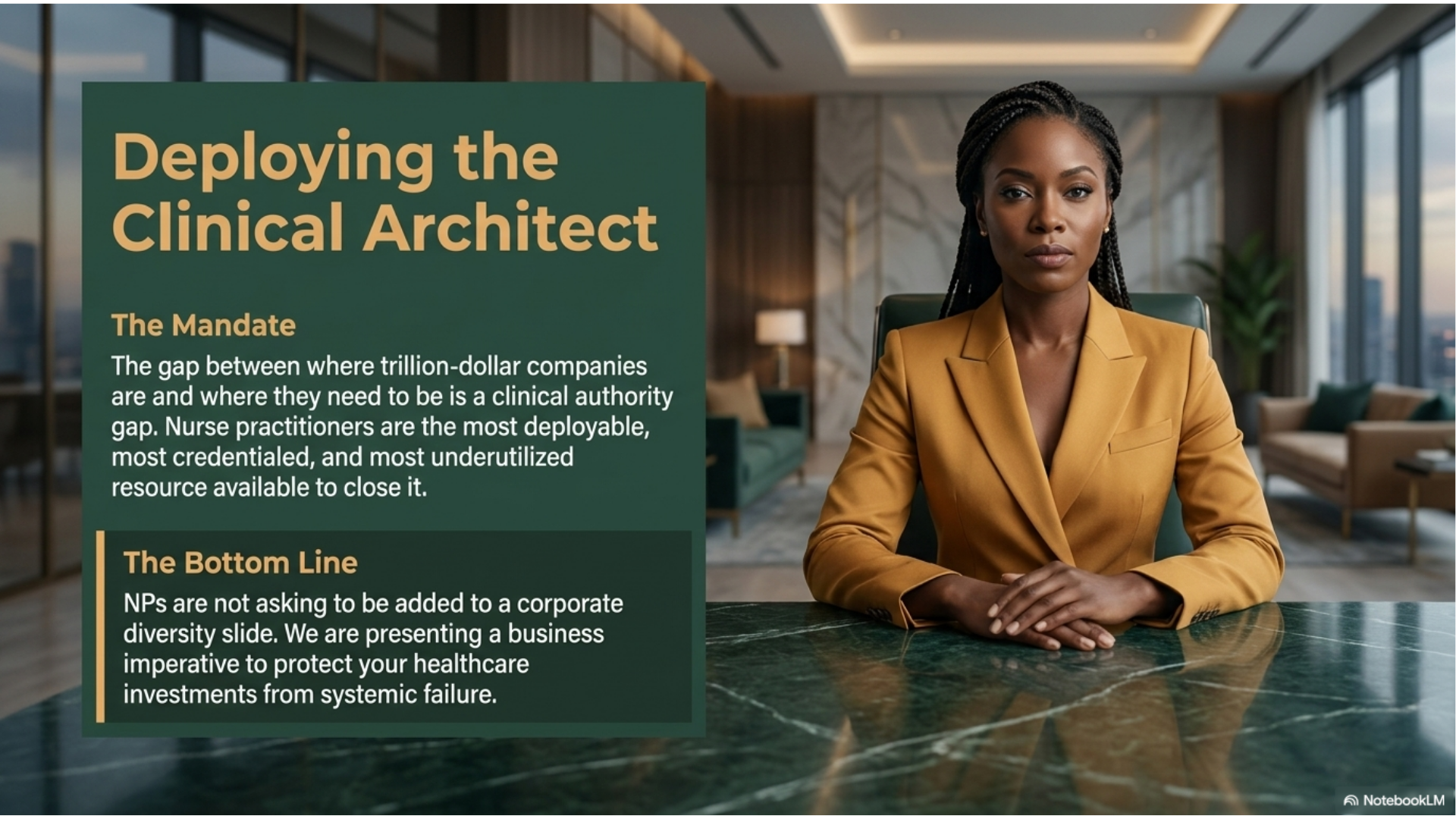
NPs are not asking to be added to a diversity slide. We are presenting a business case.
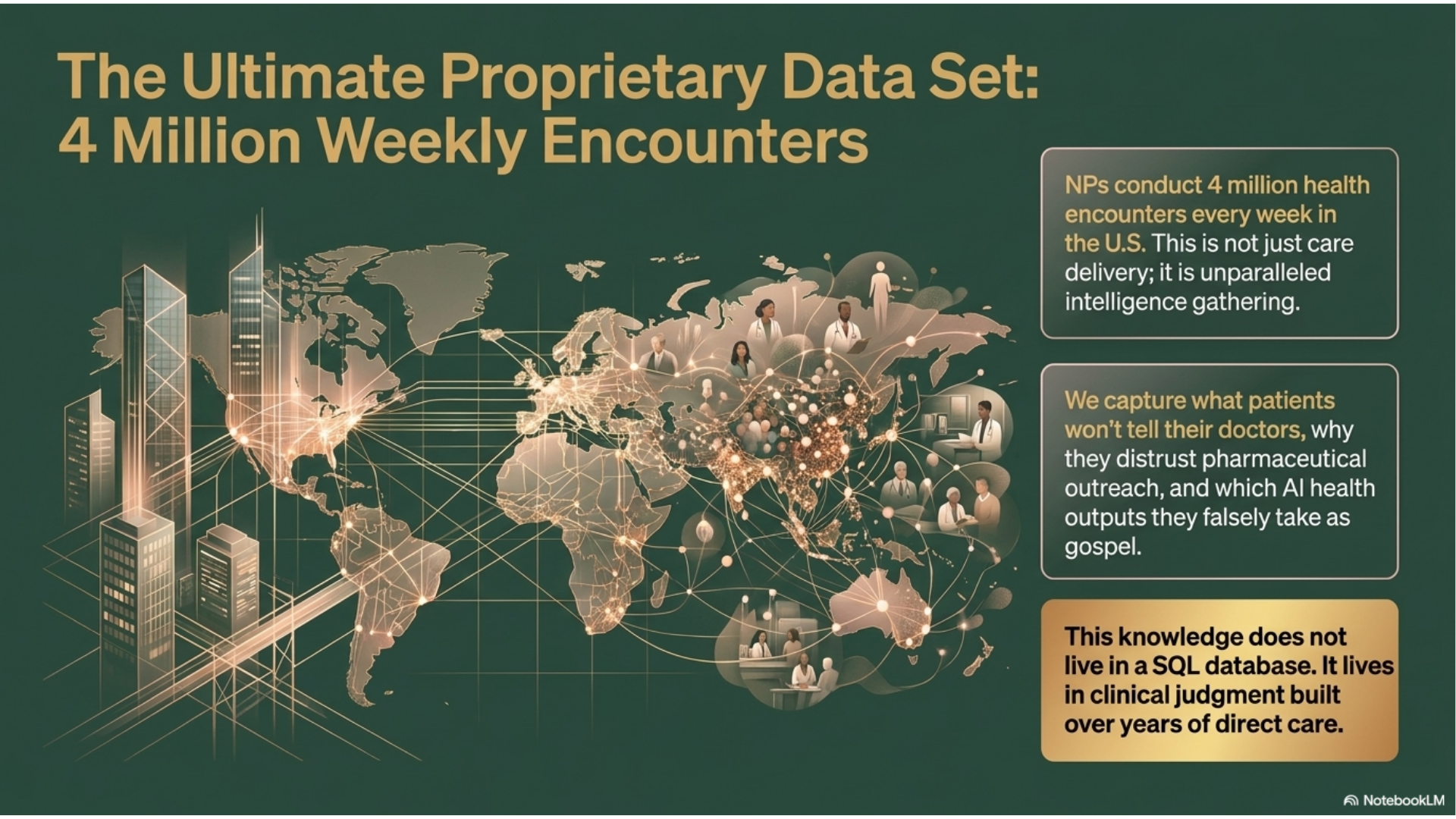
The four million health encounters that nurse practitioners conduct each week in this country are not just care delivery. We are intelligence gathering. We know what patients actually ask. We know what they do not tell their doctors. We know which communities do not trust pharmaceutical companies, which clinical conditions go undiagnosed in dark skin because of the lack of diversity in medical and nursing education, which AI health outputs patients are already taking as gospel even when they are wrong. That knowledge lives in clinical judgment built over years of direct care, exactly the kind of judgment that is conspicuously absent from the leadership structures of the companies building the future of healthcare.
The opportunities are immense on both sides. Nurse practitioners are the most deployable, most credentialed, most underutilized resource available to close it.
About the Author
Dr. Kimberly Madison, DNP, AGPCNP-BC, WCC is a Board-Certified, Doctorally-prepared Nurse Practitioner, educator, researcher, and author dedicated to advancing dermatology nursing education with an emphasis on skin of color, business acumen, and digital literacy. She is the founder of Mahogany Dermatology Nursing | Education | Research™ and the Alliance of Cosmetic Nurse Practitioners™, the first dermatology nursing organization in the country built at the intersection of clinical excellence, skin of color care, and financial literacy for nurses. A selected participant in the Harvard Business School Foundry Mindset Bootcamp, Dr. Madison continues to sharpen the entrepreneurial infrastructure behind her mission. Through peer-reviewed research, published books, and a growing community of nurse entrepreneurs, Dr. Madison is building the infrastructure that makes this profession sustainable for the people who choose it.
.svg)

.svg)
.svg)